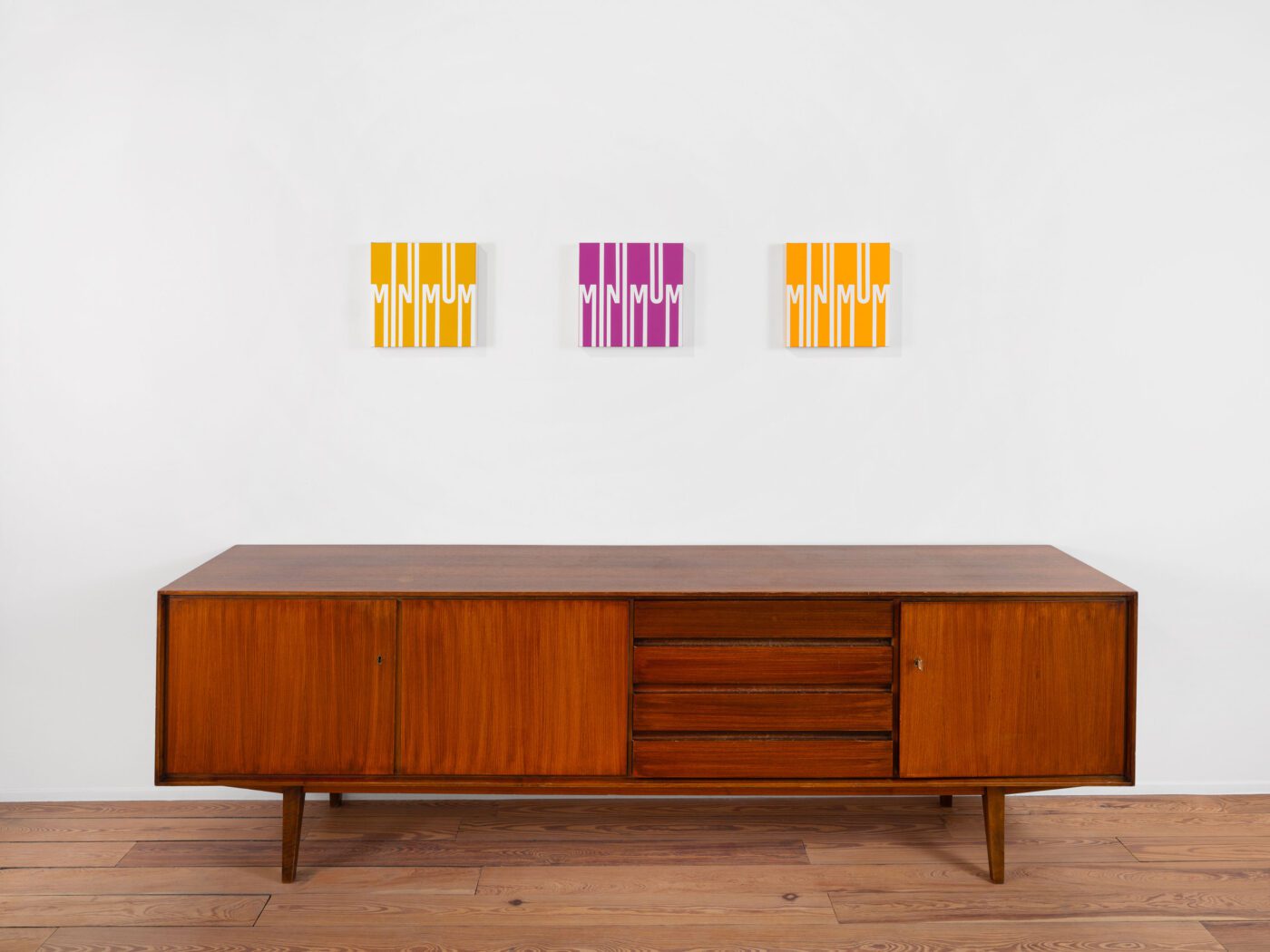
galerie lange + pult is pleased to announce the exhibition of Christian Robert-Tissot, marking the artist’s first presentation in their Geneva space.
Swiss artist Christian Robert-Tissot, born in 1960 in Geneva, has been working with language for over thirty years. His works neither aim to communicate nor to illustrate, but to state—placing a sentence with a calmness that is enough to establish its presence in the space.
Before the text, there may be the monochrome. Its continuity is evident in the economy of his practice, in this constant frontal approach and his refusal of the spectacular. What was painted in 1990 could just as well have been painted in 2026, in both subject and form. Painting does not evolve into something else; it persists, faithful to an almost stubborn idea of painting as a space for thought.
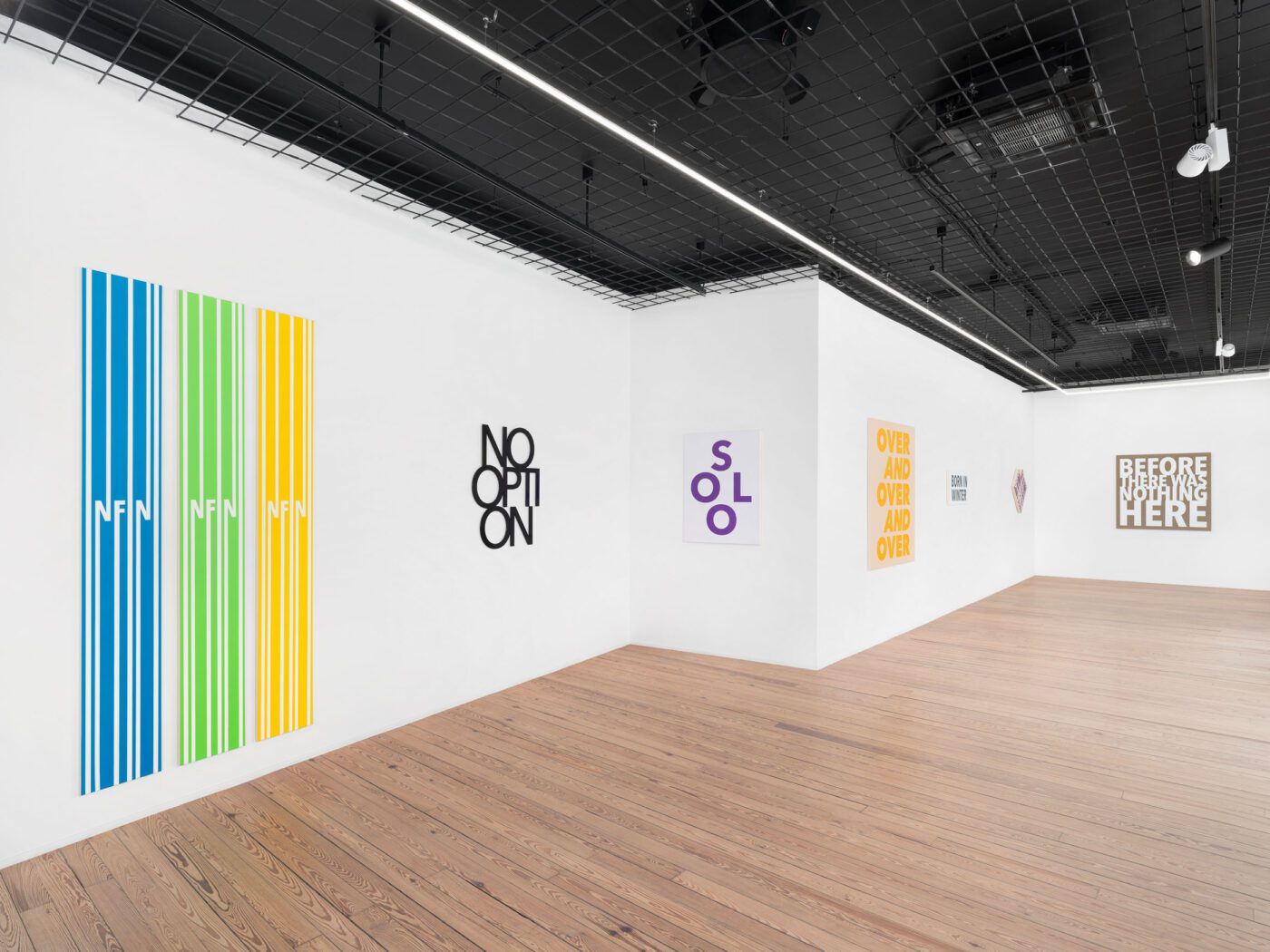
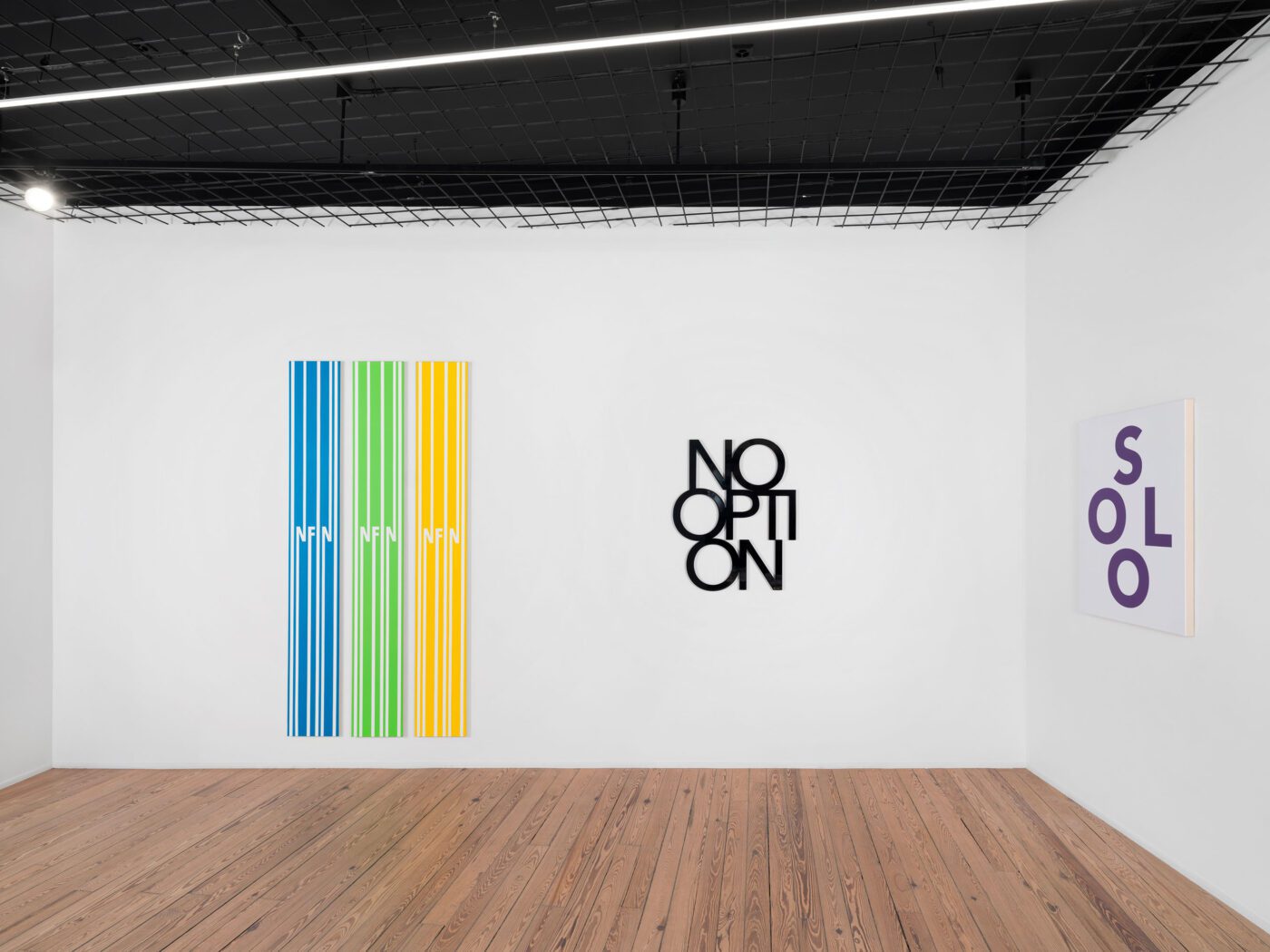
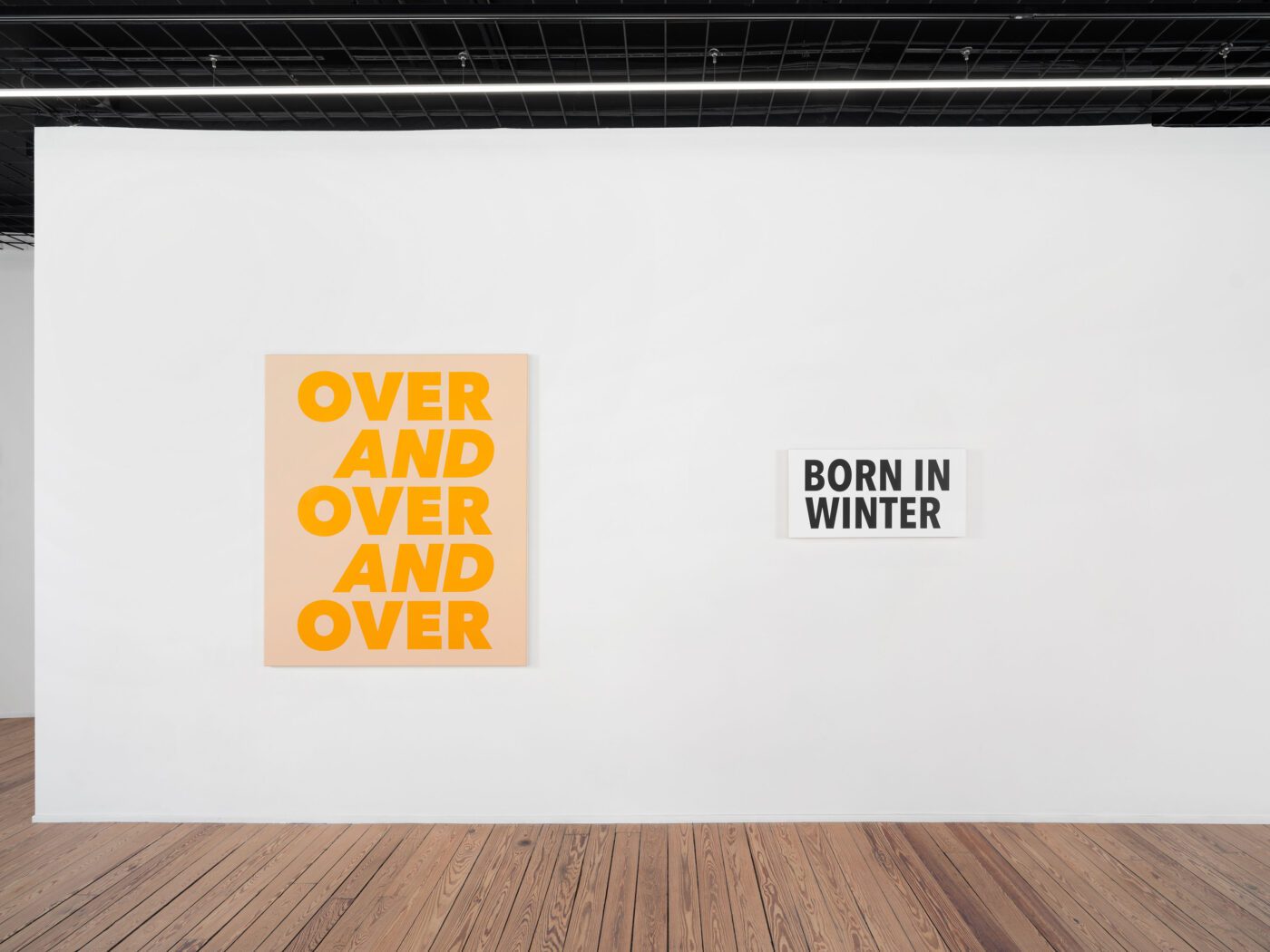
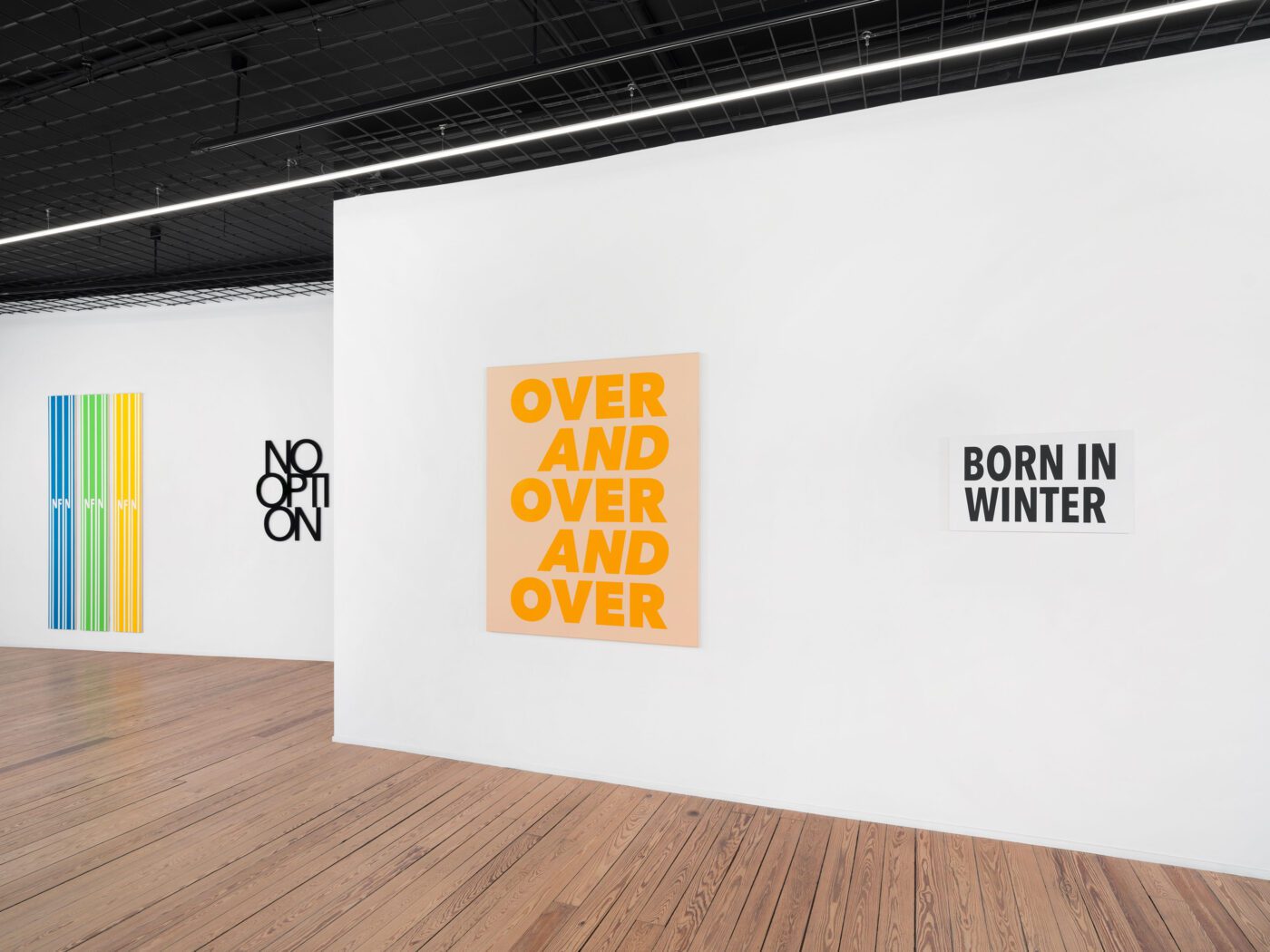
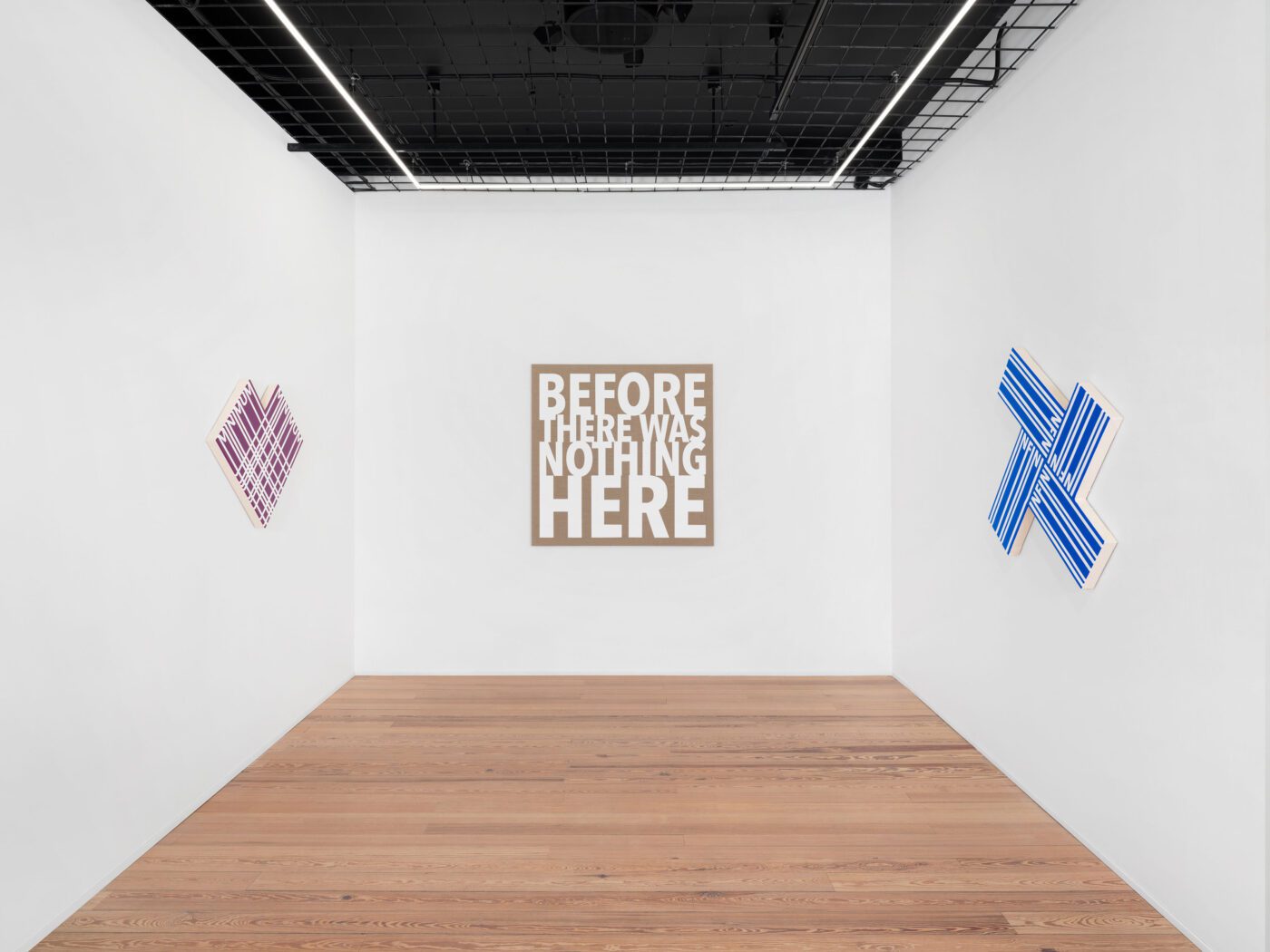
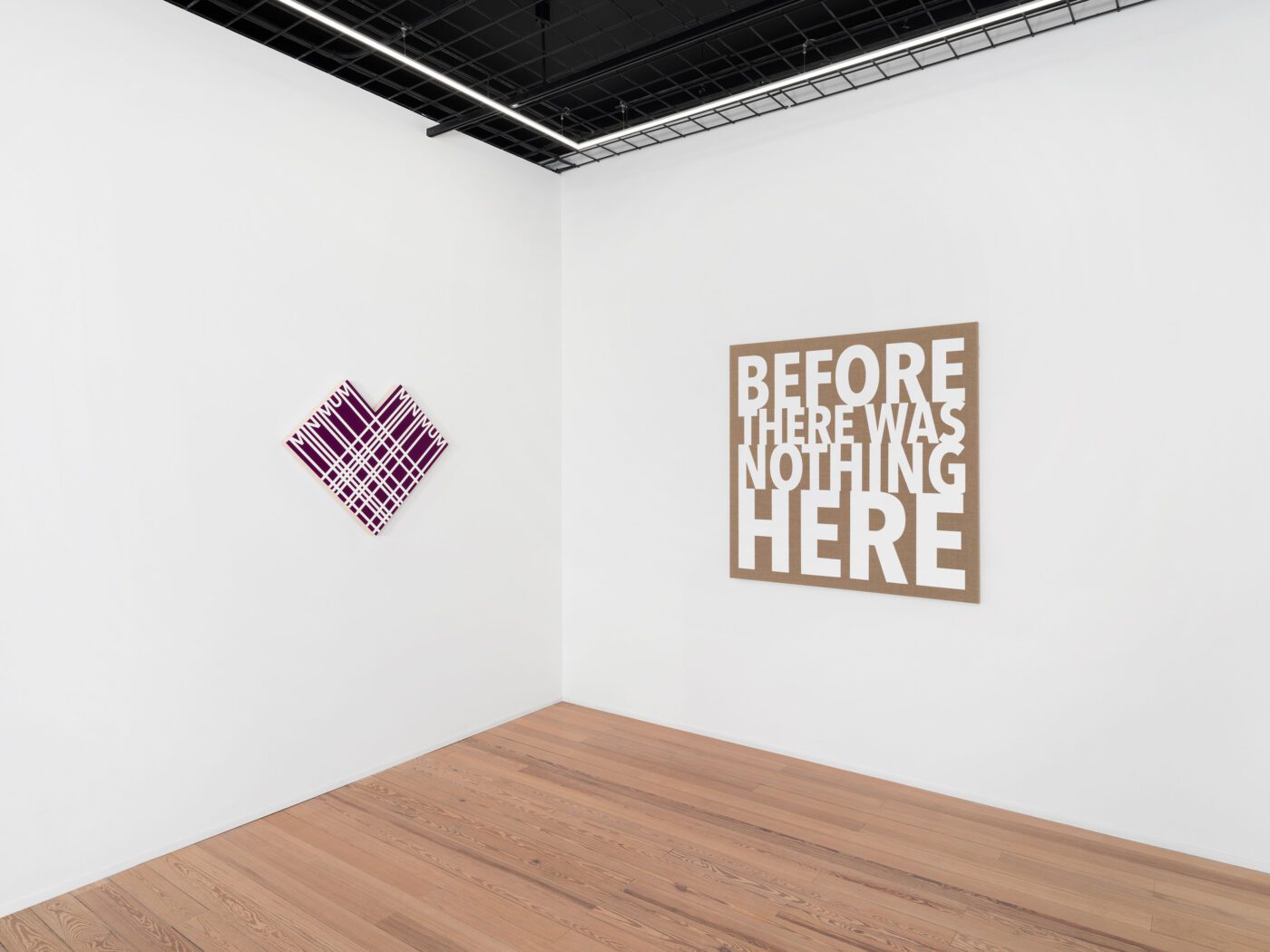
The words are painted, literally—until letter and surface become one, image and language inseparable. Typeface, color, and composition all serve the same pursuit of neutrality. Avenir Bold, restrained, almost dispassionate colors. Nothing is decorative; nothing supports meaning. Words attempt to exist without typographical dramatization, allowing language to appear for what it is, in its simple condition as a statement.
Thinking without words
LOAD MORE +
galerie lange + pult is pleased to announce the exhibition of Christian Robert-Tissot, marking the artist’s first presentation in their Geneva space.
Swiss artist Christian Robert-Tissot, born in 1960 in Geneva, has been working with language for over thirty years. His works neither aim to communicate nor to illustrate, but to state—placing a sentence with a calmness that is enough to establish its presence in the space.
Before the text, there may be the monochrome. Its continuity is evident in the economy of his practice, in this constant frontal approach and his refusal of the spectacular. What was painted in 1990 could just as well have been painted in 2026, in both subject and form. Painting does not evolve into something else; it persists, faithful to an almost stubborn idea of painting as a space for thought.
The words are painted, literally—until letter and surface become one, image and language inseparable. Typeface, color, and composition all serve the same pursuit of neutrality. Avenir Bold, restrained, almost dispassionate colors. Nothing is decorative; nothing supports meaning. Words attempt to exist without typographical dramatization, allowing language to appear for what it is, in its simple condition as a statement.
Thinking without words is impossible, the artist asserts, reminding us that seeing and thinking are never truly separate. Yet words slip. Screen, data no longer evoke the same imaginaries they did twenty years ago, and this shift subtly alters how the works are read. The canvas remains identical, but the way we look at it changes over time, with uses and contexts.
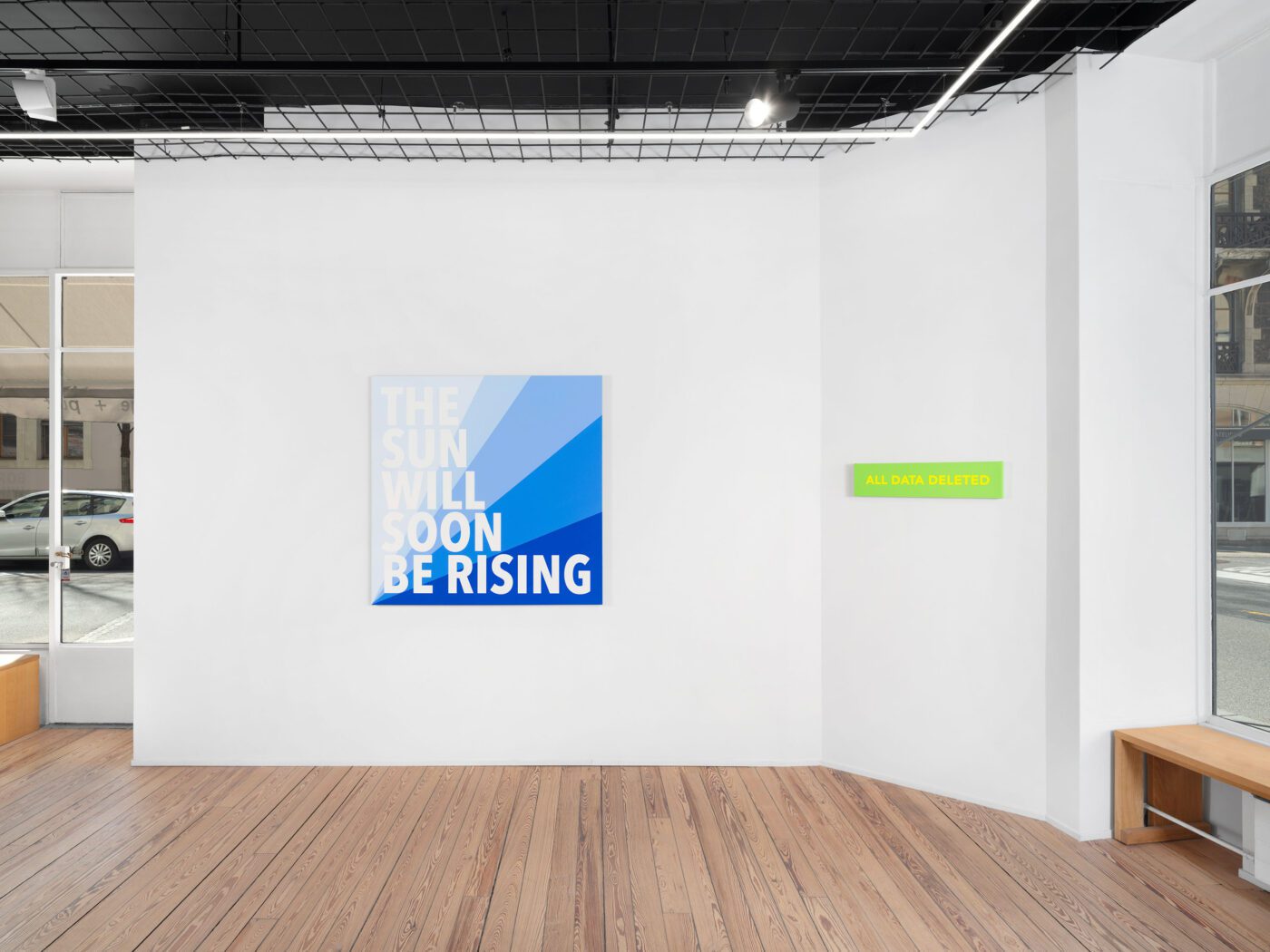
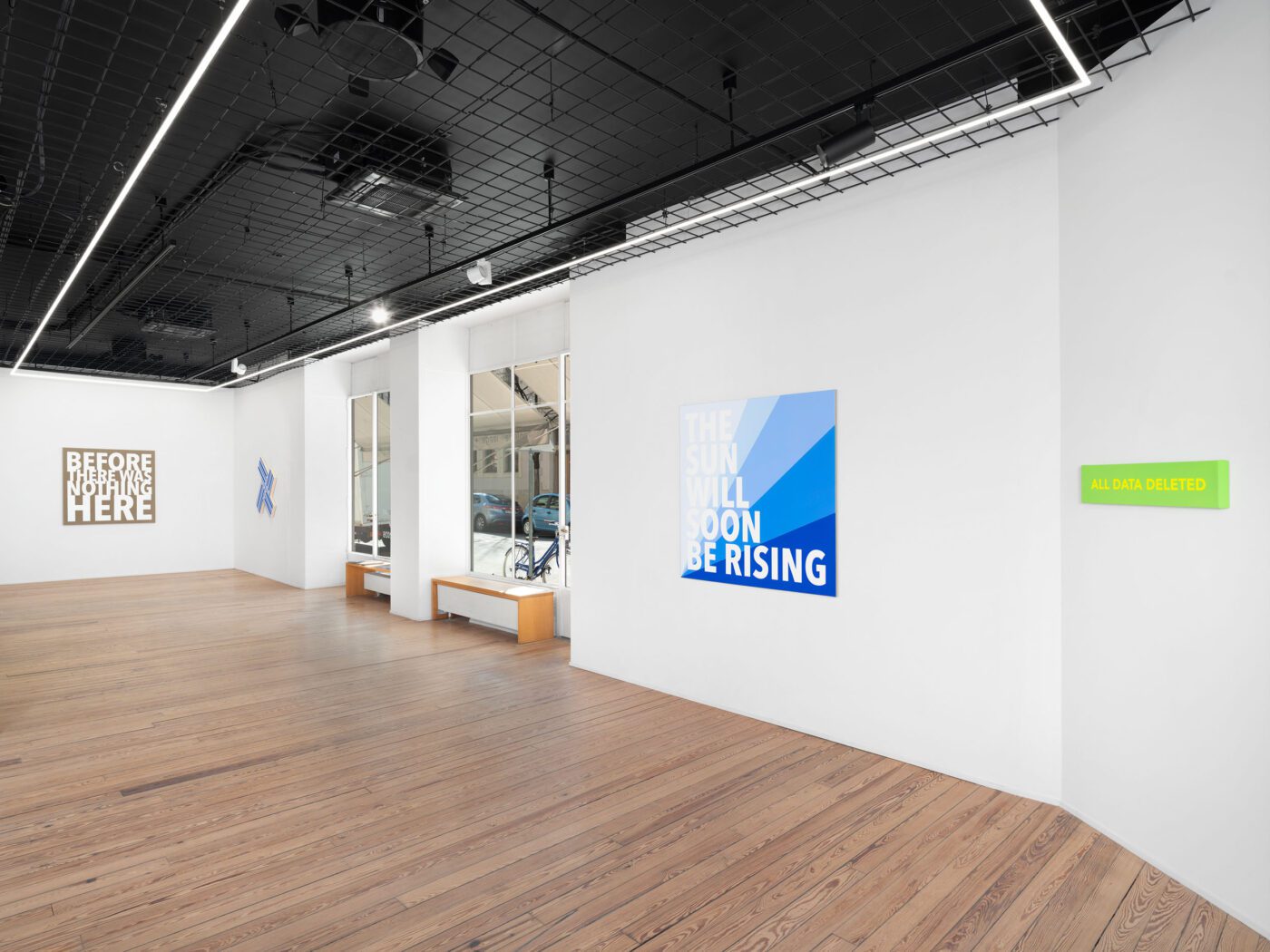
Some pieces operate through repetition, as in Over and Over and Over, a phrase that returns until it becomes almost mental. Others subtly shift tone. The Sun Will Soon Be Rising, presented at Vienna’s train station following an inverted version of the statement (Hurry Up, The Sun Is About To Set), introduces a brighter inflection. The gradient softens typographical rigor, as if an atmosphere lightly disturbs the initial neutrality, transforming a simple linguistic reversal into a perceptual experience.
At a time when images saturate space, text asserts itself differently. It does not seek to capture attention immediately; it remains available, in waiting. The work imposes nothing, slowly activating a process of reading and thought.
One believes they understand at first, only for the sentence to return later, differently, as if displaced by time.